



Foldable Smartphones: Why 2026 Could Be the Turning Point (or Failure)
2026 marks the boundary between technological maturity and the risk of obsolescence for foldable devices. We analyze hardware evolution, software challenges, and real-world utility to evaluate if the market is ready for mass adoption or if foldables will remain a luxury niche.

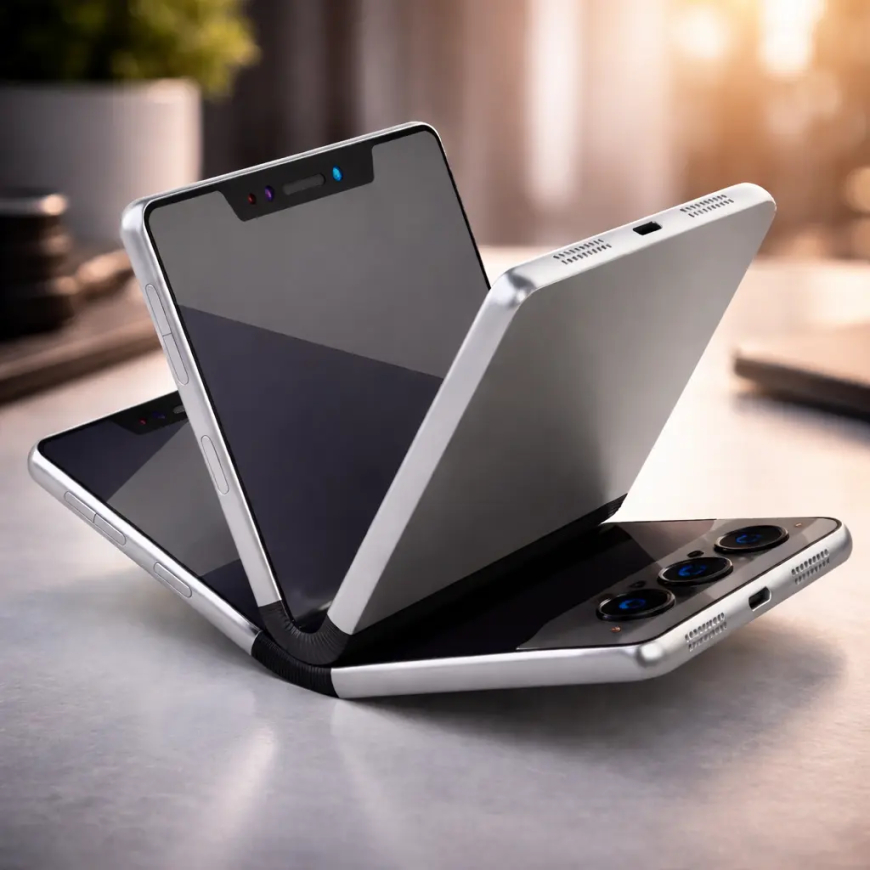
Observing the workflows we manage daily at GoBooksy, we notice how mobile technology is no longer just an accessory, but a critical extension of our operational capabilities. When we talk about foldable smartphones in 2026, we are no longer discussing futuristic prototypes or experiments for early adopters, but a product category that must necessarily prove its reason for existing beyond the novelty effect. After years of iterations, redesigned hinges, and ultra-thin glass, we have reached a fundamental crossroads where technology must stop demanding compromises from the user and start providing tangible solutions that justify prices that remain decidedly high.
The operational reality we see emerging does not concern synthetic benchmarks, but mechanical resistance over the long term. The main issue is no longer whether the screen will turn on after a thousand openings, but how the physical structure of the device reacts to real life. Dust, pocket debris, and the daily wear of moving parts remain the true adversaries of these devices. Despite engineering progress, the physics of folding involves material stress that traditional form factors completely ignore. We often see devices that, after a year of intensive use, present micro-fractures or loosening in the hinge that compromise not only the aesthetics but the user's confidence in the longevity of their investment. 2026 is the year manufacturers must demonstrate they have definitively overcome structural fragility, guaranteeing robustness comparable to that of a monolithic device.
Another critical aspect we frequently encounter while developing digital interfaces at GoBooksy is software coherence. Having a display that doubles in size is useless if the application ecosystem is unable to adapt fluidly to the change of state. Too often, the user experience shatters against apps that do not scale correctly, text that gets cut off, or layouts that seem like merely enlarged versions of a phone interface. The real challenge of 2026 lies not in hardware, but in the software's ability to interpret user intent: moving from quick consultation to a deep productivity session without friction. Multitasking, often touted as the true advantage of foldables, only becomes operational when the operating system manages windows and dragging with the same naturalness as a desktop, something we still see happening only intermittently today.
There is also a positioning issue we cannot ignore. The market has split into two distinct philosophies: book-style devices, oriented towards productivity, and clamshells, focused on compactness and style. This bifurcation has created confusion among average users, who struggle to understand what specific problem these devices solve better than a traditional smartphone paired with a tablet. In our daily work, we notice that real utility emerges only when the workflow requires consulting complex data in extreme mobility. For the user who primarily consumes social media or messaging, the ergonomic advantage is often nullified by the greater thickness when closed and the constant need to "open" the device to perform trivial actions.
Price remains the highest psychological and practical barrier. In 2026, the democratization of foldable panels is still a slow process. Repair costs, particularly for internal displays, represent a variable that frightens companies and professionals evaluating fleet upgrades. A device that costs as much as a high-end laptop but offers significantly lower repairability poses serious questions about the economic sustainability of the purchase. The bet for this year is to understand if manufacturers will succeed in proposing reliable mid-range devices or if foldables will remain confined to the premium segment, accessible only to those willing to pay for technological exclusivity.
The turning point or failure of this technology will depend on the ability to transform "foldable" from a technical feature into an invisible advantage. As long as the user has to worry about how they open the phone, not pressing too hard on the screen, or protecting it from sand at the beach, the technology will not be mature. At GoBooksy, we believe real success will arrive only when the form factor becomes irrelevant compared to the user experience, allowing the technology to disappear and leave room only for content and action, without requiring special attention or excessive caution anymore.